Cultivation · Nutrition context
Roots and Nutrients
Flavour starts in the grove. Here is what oranges need to grow, where they come from, and what they genuinely offer on the plate — no exaggeration required.
01 — ClimateWarm days, careful winters
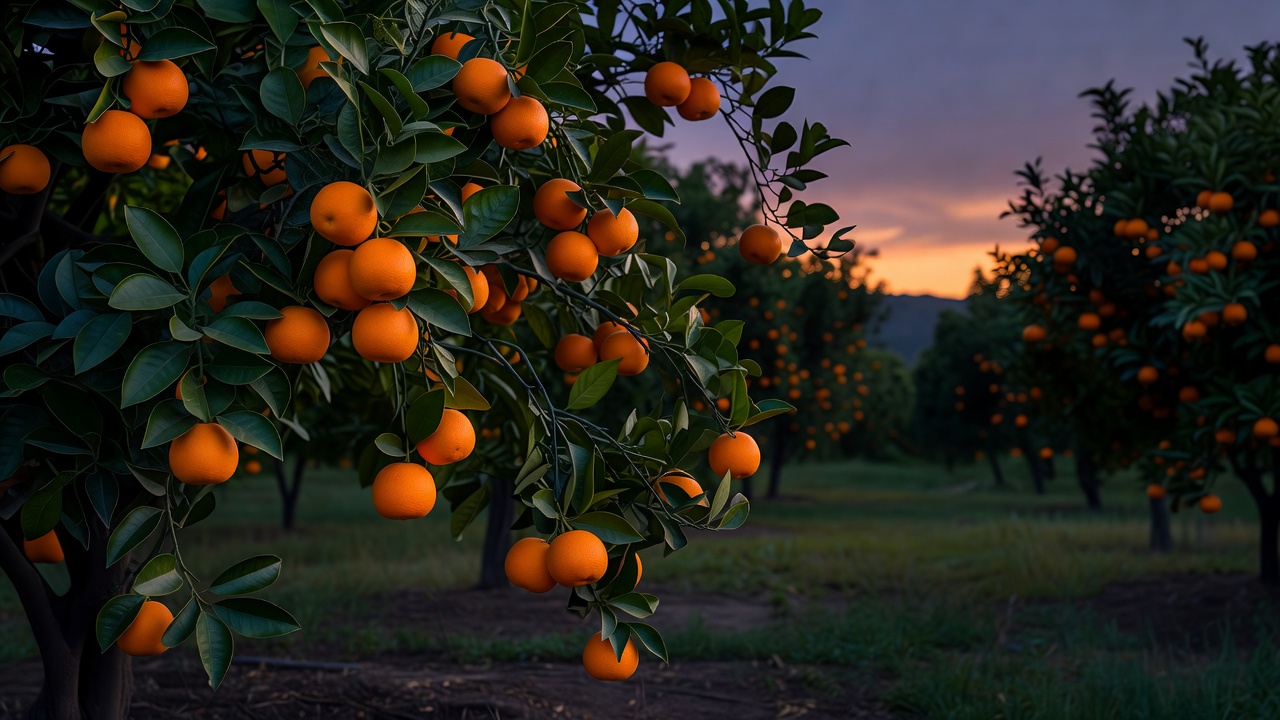
Citrus is subtropical. Trees grow best with long, warm seasons, plenty of sun and reliable water, and they are vulnerable to frost: temperatures a few degrees below freezing for several hours can damage fruit and young wood. Yet a little cold is useful. Cool nights help develop the orange colour of the peel, and, as we saw with blood oranges, they trigger red pigments in the flesh. In humid tropical lowlands, oranges are often sweet but stay green-skinned.
Oranges are non-climacteric: unlike bananas or avocados, they do not continue ripening after harvest. Growers test sugar-to-acid ratios before picking, and some fruit is "degreened" with controlled ethylene exposure to change peel colour — this affects appearance, not sweetness.
02 — Grafting and rootstocksTwo plants in one tree
Commercial orange trees are nearly always grafted. The fruiting variety (the scion) is joined to a rootstock chosen for disease resistance, soil tolerance or vigour. This allows a single bud sport — a Cara Cara or a Moro — to be multiplied faithfully, while the roots handle local conditions. Research collections such as the Citrus Variety Collection at the University of California, Riverside, preserve hundreds of varieties for this work.
03 — Where oranges growThe major regions
Brazil, centred on São Paulo state, is the world's largest orange producer and the dominant exporter of orange juice. China, India, the United States (Florida for juice, California for fresh fruit), Mexico, Egypt and Spain — especially the Valencian Community — are also major producers. Sicily is synonymous with blood oranges, and Spain's Andalusia supplies most Seville oranges.
Since 2005, Florida's groves have been severely affected by huanglongbing (citrus greening), a bacterial disease spread by the Asian citrus psyllid. It causes small, bitter, misshapen fruit and eventually kills trees. Florida's orange production has fallen sharply as a result, and research into resistant rootstocks and management continues.
04 — Nutrition contextWhat a serving offers
Values below are approximate, per 100 g of edible portion, based on USDA FoodData Central reference data. Real fruit varies with variety, ripeness and growing conditions.
| Food | Energy | Carbohydrate | Sugars | Fibre | Vitamin C |
|---|---|---|---|---|---|
| Orange, raw | 47 kcal | 11.8 g | 9.4 g | 2.4 g | 53 mg |
| Orange juice, fresh | 45 kcal | 10.4 g | 8.4 g | 0.2 g | 50 mg |
| Mandarin, raw | 53 kcal | 13.3 g | 10.6 g | 1.8 g | 27 mg |
| Grapefruit, pink | 42 kcal | 10.7 g | 6.9 g | 1.6 g | 31 mg |
| Lemon, raw (no peel) | 29 kcal | 9.3 g | 2.5 g | 2.8 g | 53 mg |
A medium orange (about 130–140 g) provides a substantial share of an adult's daily vitamin C reference intake, along with fibre and potassium. Vitamin C deficiency causes scurvy, and in 1747 the Scottish naval surgeon James Lind tested citrus among sailors aboard HMS Salisbury — one of the earliest controlled clinical trials.
What citrus does not do is just as important. Eating oranges will not prevent colds for most people, "detox" the body or cure disease. Blood orange anthocyanins and other plant compounds are being studied, but evidence for specific health effects from normal servings is limited.
Grapefruit, pomelo and Seville (bitter) orange can interact with certain medicines, including some statins and blood-pressure drugs. Check with a pharmacist or doctor if you take regular medication. Citrus acidity can also bother people with reflux or sensitive teeth.
05 — Practical choicesWhole fruit first
Whole oranges keep their fibre and are slower to eat, so they are generally a better everyday choice than juice. If you enjoy juice, a small glass with a meal is a sensible pattern. Store oranges in a cool place or the fridge, and buy in season for the best flavour — winter for blood oranges and navels, spring and summer for Valencias.