Kitchens · Global dishes
Citrus Across Tables
Acidity cuts richness, peel lifts aroma, and bitterness adds depth. Follow the orange — and its sour cousins — through some of the world's most memorable dishes.
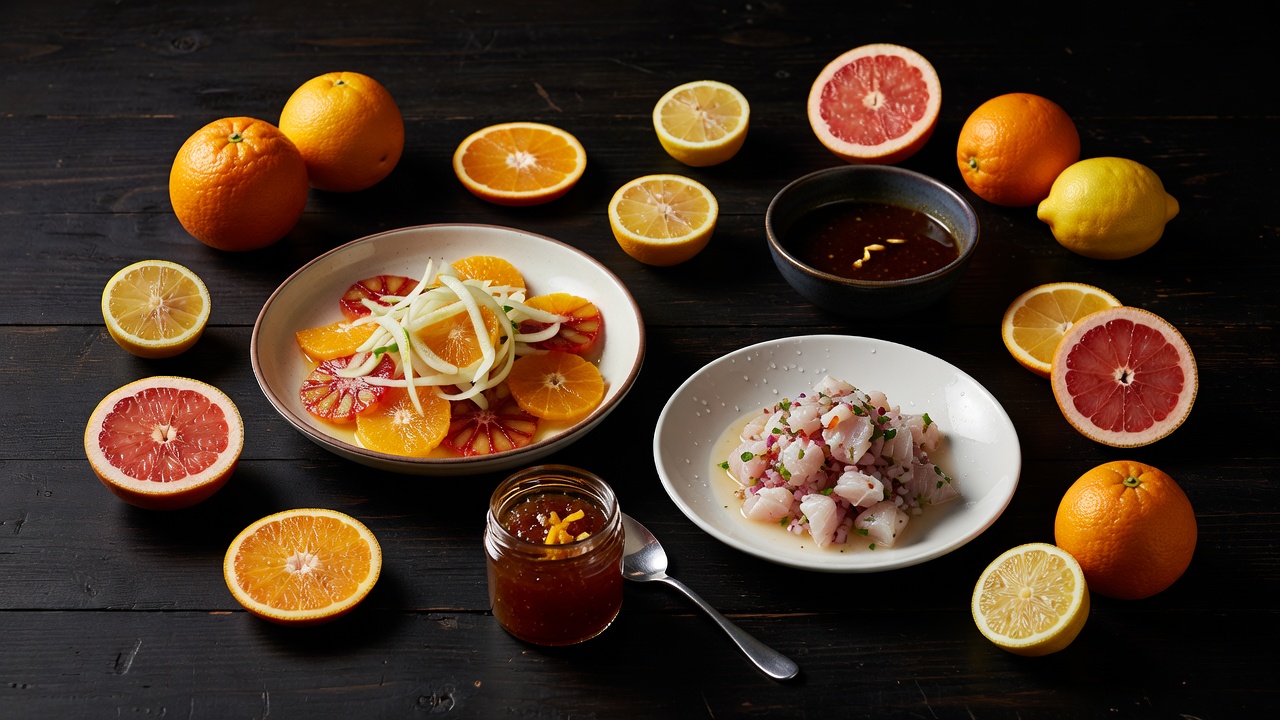
01 — SicilyInsalata di arance
In Sicilian winters, when blood oranges are at their best, cooks slice them into rounds and dress them with olive oil, salt and black pepper. Fennel adds crunch and anise; black olives bring brine; thin red onion adds a bite. It is a dish of contrasts — sweet against salty, juicy against crisp — and it shows how well oranges sit in savoury food.
Blood orange and fennel salad (serves 2)
Ingredients
- 3 blood oranges (Tarocco or Moro)
- 1 small fennel bulb
- ¼ red onion, very thinly sliced
- 10 black olives, pitted
- 2 tbsp extra-virgin olive oil
- Flaky salt and black pepper
- Fennel fronds or mint to finish
Method
- Soak the onion in cold water for 10 minutes to soften its bite, then drain.
- Cut the peel and white pith from the oranges with a sharp knife and slice into rounds.
- Shave the fennel as thinly as possible.
- Arrange oranges, fennel, onion and olives on a plate.
- Pour over any orange juice from the board, then the olive oil.
- Season with salt and pepper and scatter with fronds just before serving.
02 — Yucatán, MexicoSour orange and achiote
In Mérida and across the Yucatán Peninsula, naranja agria — a bitter orange — is essential. Mixed with achiote paste, garlic and spices, its juice marinates pork for cochinita pibil, traditionally wrapped in banana leaves and cooked slowly in an underground pit called a pib. The acid helps tenderise the meat and the result is tangy, earthy and deep red. Outside Mexico, cooks often approximate sour orange with a mix of orange and lime juice.
03 — Britain and SpainThe marmalade bridge
Seville oranges are too sour to eat out of hand, but their peel is full of pectin and aroma. Britain has long imported them for marmalade, and the Keiller family of Dundee, Scotland, helped make chunky orange marmalade famous from the late eighteenth century. Each January and February, home cooks still wait for the short Seville season. The Dalemain Marmalade Festival in Cumbria celebrates the tradition every year.
04 — Peru and JapanCuring and dipping
Peruvian ceviche relies on lime, not orange, but it belongs in any citrus kitchen: raw fish is "cooked" by acid, and the leftover marinade, leche de tigre, is sipped on its own. Food safety matters here — use very fresh, properly handled fish, because acid does not kill all pathogens.
In Japan, ponzu blends citrus juice — yuzu, sudachi or the bitter orange daidai — with soy sauce, mirin, kombu and katsuobushi. Some ponzu recipes use small amounts of mirin or sake; for a fully alcohol-free version, simmer them off or replace with a little sugar and rice vinegar.
05 — Morocco, Iran and GreecePerfume and sweetness
A classic Moroccan orange salad is simplicity itself: orange slices, a dusting of cinnamon, a few drops of orange blossom water and sometimes chopped dates or almonds. In Iran, shirin polow ("sweet rice") layers saffron rice with candied orange peel, slivered almonds and pistachios, a dish served at weddings. Greece offers portokalopita, an orange cake made with dried filo pastry and soaked in orange syrup.
France contributes canard à l'orange, whose sauce bigarade was originally made with bitter oranges. Many modern versions add orange liqueur; we suggest fresh juice, zest and a splash of vinegar instead.
Kitchen tip: zest before you juice. Once an orange is cut, grating the peel becomes difficult, and the zest carries most of the aroma.